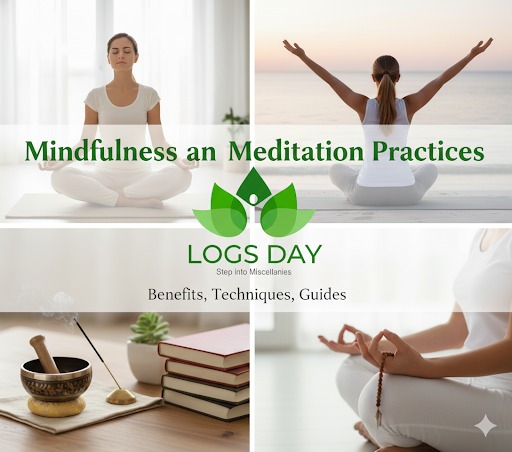
Mindfulness and meditation have moved from niche spiritual practices to mainstream tools used by hundreds of millions of people to manage stress, sharpen focus, and support mental health. In a world where wellness is a growing priority and the global wellness market now exceeds $2 trillion, these simple mind–body practices offer a low-cost, accessible way to feel calmer and more in control each day.
LogsDay is a trusted lifestyle and wellness platform dedicated to providing practical, research-backed guidance on daily living, health, and personal development. The team’s goal is to help readers make informed decisions that support vibrant, sustainable wellbeing.
What is mindfulness?
Mindfulness means paying attention to the present moment, on purpose and without judgment, noticing thoughts, emotions, and bodily sensations as they arise. Instead of running on autopilot or getting lost in worry, mindfulness helps create a small “pause” between what happens and how you respond.
Regular mindfulness practice is often combined with meditation—structured exercises like focusing on the breath, body sensations, or sounds—to train the mind to come back to the here and now. This training builds awareness, emotional balance, and resilience over time.
Benefits of mindfulness and meditation
Research links mindfulness and meditation with wide-ranging mental and physical health benefits.
- Studies show mindfulness-based programs can reduce symptoms of anxiety, depression, and stress, and improve overall psychological wellbeing.
- A 2024 study found that just 10 minutes of app-guided mindfulness per day over 30 days reduced depression by about 19%, anxiety by around 13%, and improved overall wellbeing compared with a control group.
Meditation also affects the body; it can activate the relaxation response, improve immune function, and change brain regions involved in attention and emotion regulation. These changes explain why many people report feeling calmer, clearer, and more grounded after building a regular practice.
How common is meditation today?
Meditation is now a global habit rather than a niche trend.
- Around 275 million people are estimated to practice meditation worldwide, with India leading at about 80.7 million meditators, followed by the United States and China.
- Surveys suggest roughly one in three people globally now meditate at least sometimes, and younger generations are driving much of the growth as they look for science-backed ways to manage stress and improve mental health.
This rise aligns with broader wellness trends, where mental wellness and stress-management solutions are a rapidly expanding segment within the wellness industry.
Core mindfulness and meditation techniques
There is no single “right” way to meditate; different techniques suit different personalities and lifestyles. Here are some of the most widely used, evidence-informed practices.
1. Mindful breathing
Mindful breathing focuses attention on the natural rhythm of the breath.
- You sit or lie comfortably and notice the sensation of air moving in and out, or the rise and fall of the chest or abdomen, gently bringing the mind back whenever it wanders.
- Studies of mindful breathing, including among people with post-traumatic stress disorder, show improvements in mindfulness, reductions in depression, and better emotional regulation compared with control conditions.
This simple practice can be done for 3–10 minutes during breaks, before meetings, or at bedtime.
2. Body scan meditation
Body scan meditation systematically moves attention through the body from head to toe (or toe to head), noticing tension, warmth, pressure, or other sensations.
- In mindfulness-based stress reduction (MBSR) programs, a 20–30 minute guided body scan is often one of the first formal practices taught.
- Research suggests body scan practices help increase present-moment awareness and can reduce stress, anxiety, and physical discomfort when practiced regularly.
Body scans are especially helpful if you feel “stuck in your head” or disconnected from the body.
3. Sitting mindfulness meditation
In sitting mindfulness meditation, you sit upright, anchor attention (often on the breath), and notice thoughts, sounds, or emotions as passing events.
- The goal is not to stop thinking but to observe thoughts without immediately reacting, which reduces rumination and negative thinking loops.
- Mindfulness-based cognitive therapy (MBCT), which uses this style of meditation, has been shown to lower the risk of depressive relapse in people with recurrent depression.
Even 10–15 minutes a day can gradually improve focus and emotional balance.
4. Informal mindfulness in daily life
Mindfulness is not limited to sitting with eyes closed; it can be woven into ordinary activities.
- Practices like mindful eating, mindful walking, or mindful dishwashing simply involve bringing full attention to sensations, movements, and surroundings in real time.
- This helps break habitual multitasking, reduces stress, and can make everyday routines feel more meaningful and less rushed.
Informal practices are ideal for busy people who struggle to fit in longer formal sessions.
Getting started: A simple step-by-step guide
Beginning a mindfulness or meditation practice does not require special equipment or long hours.
- Many experts suggest starting with 5–10 minutes per day, gradually increasing the duration as it becomes more comfortable.
- A common beginner routine is: find a quiet spot, sit comfortably, set a timer, focus on the breath, and gently return attention whenever the mind wanders—over and over again.
Digital tools can help with consistency: meditation and mental wellness apps now have millions of users and offer structured programs, reminders, and short “on-the-go” sessions. Choosing a trusted, research-informed app or teacher ensures guidance is safe and evidence-aligned.
Mindfulness in the wider wellness landscape
As wellness becomes more data-driven, consumers increasingly want tools that deliver measurable outcomes like lower stress, better sleep, and improved mood. Mindfulness and meditation fit this demand, with growing research and accessible technology—from apps to wearables—helping people track changes in wellbeing over time.
For many, these practices are no longer just relaxation techniques but foundational habits for emotional resilience, focus, and long-term mental health.